
REVIEW · THE UAE
Dubai: Emirati Cultural Breakfast Experience
Slow down for a taste of old Dubai. This 1.5-hour breakfast at the Sheikh Mohammed Centre for Cultural Understanding offers more than food: you sit in a traditional wind tower house, ask direct questions, and hear how religion and custom shape daily life in the UAE. I like the relaxed setting and the chance to speak openly about Dubai today.
I also like the food-focused format. Arabic coffee, dates, tea, local Emirati dishes, and dessert give the conversation a useful anchor. The main consideration is time: 90 minutes is enough for a good introduction, but not enough for a full study of Emirati culture. The English-language experience also means you will need to be comfortable following conversation in English.
In This Review
- Key points at a glance
- Why this breakfast adds something to a Dubai visit
- Entering House 26 in Al Fahidi
- Arabic coffee, dates, tea, and local food
- The conversation about Emirati customs
- A calm counterpoint to Dubai’s polished side
- What the 1.5-hour schedule feels like
- Is $38 a fair price?
- Practical details that affect your choice
- Who will enjoy this most
- Should you book the Emirati Cultural Breakfast?
- FAQ
- Where does the Emirati Cultural Breakfast take place?
- How long does the experience last?
- What food and drinks are included?
- Is the experience conducted in English?
- Can I ask questions about Dubai and Emirati culture?
- Is the breakfast served in a traditional building?
- How much does the experience cost?
- Can I cancel for a full refund?
Key points at a glance
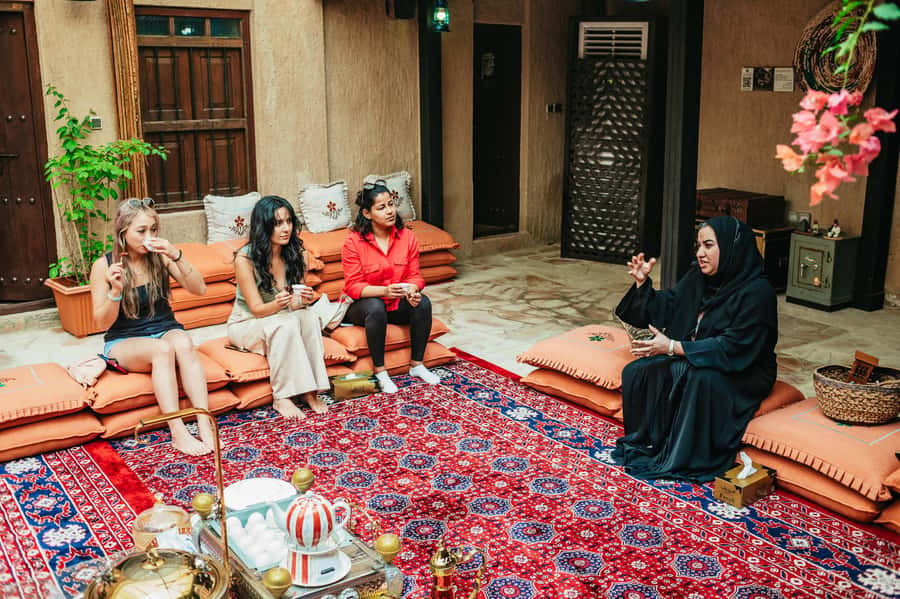
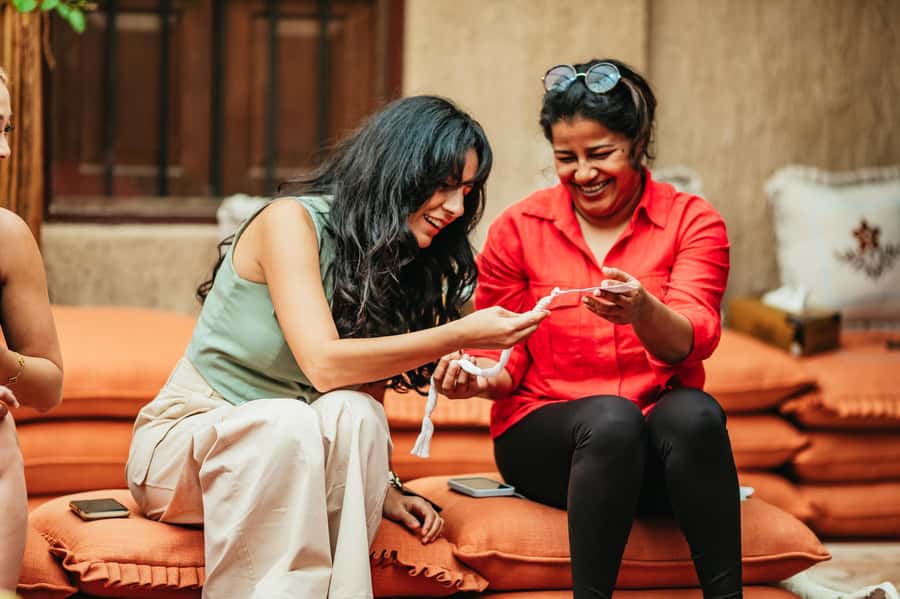
- Traditional setting: Eat in a wind tower house in the Al Fahidi Historic District, formerly known as the Al Bastakiya trading village.
- Food with context: Try Arabic coffee, dates, tea, local dishes, and dessert while learning about Emirati customs.
- Open questions welcome: Ask about Islam, greetings, local sensitivities, customs, and modern life in Dubai.
- A quiet break from modern Dubai: The courtyard and floor cushions offer a slower experience than the city’s malls and towers.
- Good value at $38: The price covers the meal, cultural program, and access to a local-focused conversation lasting 1.5 hours.
- Easy planning: The meeting point is House 26 on Al Musallah Road, next to the Ruler’s Court, with free cancellation up to 24 hours before the start time.
Why this breakfast adds something to a Dubai visit
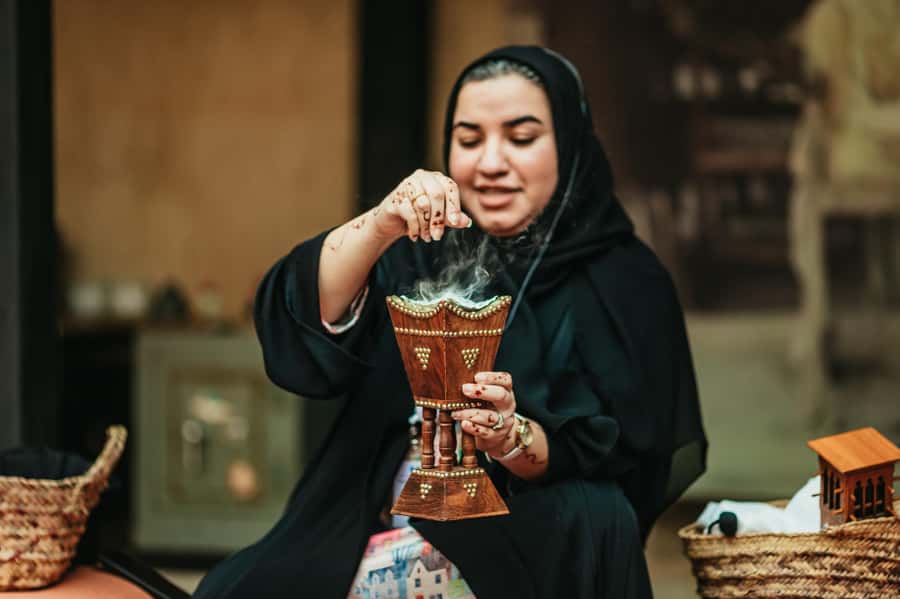
Dubai is easy to admire from the outside. You can look at towers, shop in huge malls, and move between polished attractions without learning much about the people who live here. This breakfast changes the pace.
At the Sheikh Mohammed Centre for Cultural Understanding, the focus is on conversation. You are not simply shown a traditional house or handed a plate of food. You are encouraged to ask why people greet each other in certain ways, how Islam affects local values, and which customs matter in daily life.
That direct format is the best reason to book. The center was created to improve communication between local people and those visiting the UAE. Its motto, Open Doors, Open Mind, gives you a clear idea of the tone. Questions are part of the experience, not an interruption.
I find this especially useful early in a Dubai visit. A conversation about local customs can help you read the city better for the rest of your stay. It may also prevent the usual mistake of judging Emirati life only through the modern parts of Dubai.
More Emirati meals:
- Authentic Emirati Cultural Meal and Talk in Old Dubai
★ 5.0 · 150 reviews - Dubai: Emirati Brunch & Culture
★ 4.5 · 21 reviews - Dubai: Emirati Cultural Experience with Emirati Meal
★ 4.6 · 11 reviews
Entering House 26 in Al Fahidi
The experience takes place at House 26 on Al Musallah Road, next to the Ruler’s Court. It is in the Al Fahidi Historic District, an area also associated with the old Al Bastakiya trading village.
The setting matters. A wind tower house was designed to catch air and help cool the building before modern air conditioning. You are not eating in a hotel dining room or a generic restaurant. You are in a traditional structure that connects the meal to the older trading community around it.
The breakfast is served in the center’s courtyard, with traditional floor cushions. That seating arrangement is part of the charm, though it may not suit everyone. If you prefer a chair and table for every meal, sitting on the floor may feel less comfortable than a conventional restaurant setting.
The historic district also makes this a useful stop alongside a walk through old Dubai. The food and discussion take about 90 minutes, and the area is close enough to explore before or after. You should allow extra time if you want to look around the surrounding historic lanes rather than rushing away when breakfast ends.
Arabic coffee, dates, tea, and local food
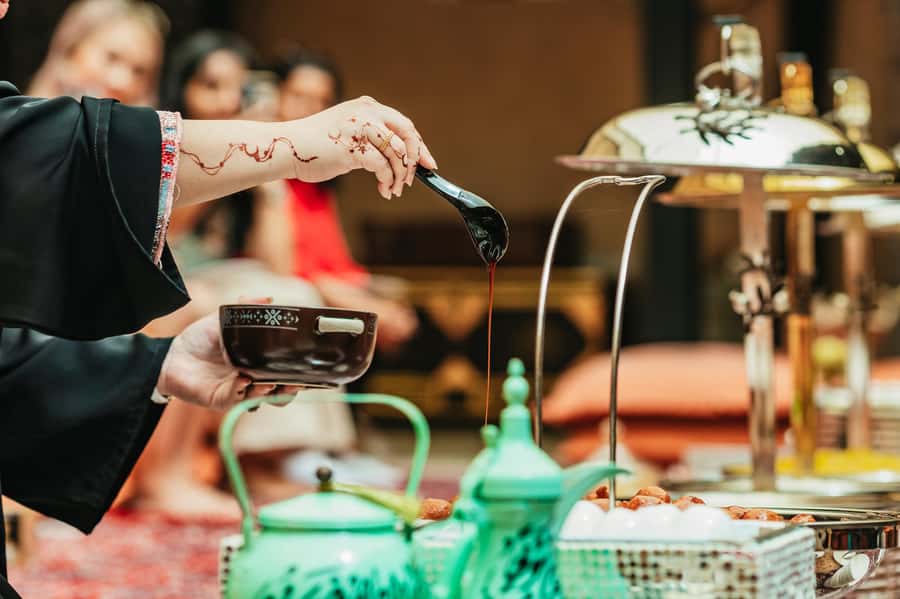
The meal begins with familiar elements of Arab hospitality: Arabic coffee and dates. Tea is also included, along with a selection of local Emirati dishes and dessert.
Arabic coffee is not just a drink here. It gives the host a natural way to explain hospitality and social customs. Dates provide the sweet counterpoint, while the larger selection of dishes turns the meeting into a proper breakfast rather than a short tasting.
The exact menu is not specified in advance, so you should think of this as a shared selection rather than a fixed dish-by-dish culinary tour. That can be a benefit if you want a broad introduction, but it may disappoint you if you are booking with one particular Emirati dish in mind.
The food is one of the most praised parts of the experience. The combination of a good meal and a well-run presentation has made the breakfast appealing even to someone returning for a fourth visit. That is strong evidence that the meal is not treated as a token extra.
Still, food is only half the point. If your main goal is a long restaurant meal or a serious cooking lesson, this is not the right choice. The dishes support the cultural talk. You eat, listen, and ask questions rather than spending the full 90 minutes focused on recipes.
The conversation about Emirati customs
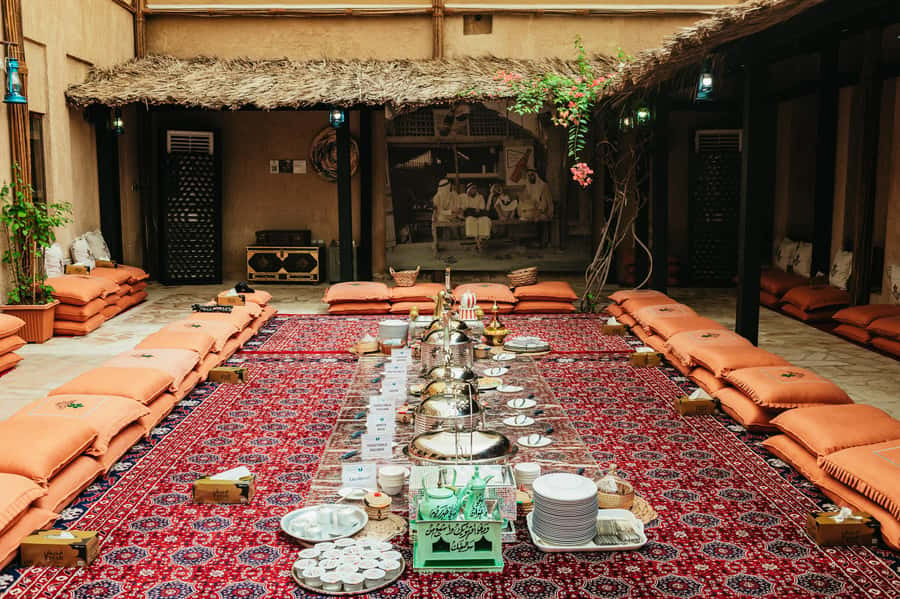
The center’s format is informal. You sit with your host or hostess, eat, and ask what you want to know. Topics can include greetings, everyday expressions, local customs, religion, and cultural sensitivities.
That open question period is where the experience becomes personal. You might want to ask about the role of Islam in public life, appropriate behavior, or how traditional values fit into present-day Dubai. The provided information specifically highlights the impact of Islam on local values and sensitivities, so this is more than a general introduction to food.
The host can also answer wider questions about life in Dubai today and the other emirates. This is useful because Dubai often feels like a separate world, packed with international businesses and residents. A frank conversation can help you understand what is local, what is imported, and how the city’s modern identity sits beside older customs.
Past participants have praised the presentation for being informative and easy to follow. One person specifically valued the chance to ask general questions about Dubai and the Emirates. That is a good sign for curious visitors who do not want a rigid speech with no room for discussion.
You should also set realistic expectations. This is a short cultural introduction, not an academic lecture or a private interview. The quality of the experience will depend partly on the questions you bring. Think ahead about two or three subjects you genuinely want to understand, and you will get more from the time.
A completely different kind of day out on the same trip:
- Dubai: Burj Khalifa Levels 124 & 125 Entry Ticket + Options
★ 4.3 · 90,891 reviews - Dubai: Desert Safari, Quad Bike, Camel Ride & Al Khayma Camp
★ 4.9 · 68,962 reviews - Dubai: Desert Safari, Quad Bike, Camel Ride and Sandboarding
★ 4.9 · 43,505 reviews - Dubai: Safari, Quad Bike, Camel Ride, and Buffet Dinner
★ 4.9 · 33,424 reviews
A calm counterpoint to Dubai’s polished side
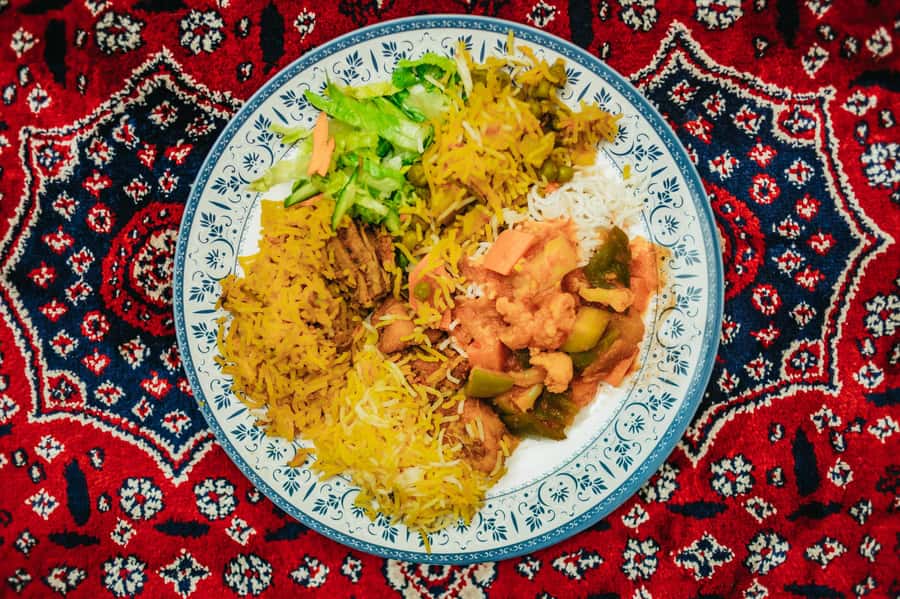
One of the strongest reasons to choose this activity is the change of mood. Dubai can be loud, glossy, crowded, and relentlessly air-conditioned. The breakfast offers a quieter hour and a half, with cushions on the floor, coffee in small cups, and conversation instead of retail displays.
That contrast has been praised by people who wanted a break from the city’s shine and noise. The experience does not pretend Dubai is only an old trading village. Instead, it gives you a chance to consider the country behind the modern skyline.
I would pair it with other sights in the Al Fahidi Historic District rather than treating it as a stand-alone trip across the city. The meeting point is precise, House 26 next to the Ruler’s Court, but you should still check the available start time when booking and plan your route to Al Musallah Road.
The historic neighborhood is also a better match for this breakfast than a rushed stop between major attractions. Give yourself enough breathing room to arrive ready for conversation. A late arrival could mean missing the opening explanations or interrupting the meal.
What the 1.5-hour schedule feels like

The short duration is both a strength and a limit.
A 90-minute program fits well into a morning. You can add it before another visit in old Dubai, and it does not consume half your day. The format is focused, with no long bus ride, shopping stop, or unrelated sightseeing segment.
The time likely passes in three overlapping parts:
- You settle into the traditional house and courtyard.
- You taste coffee, dates, tea, local dishes, and dessert.
- You listen to cultural explanations and ask questions about the UAE.
The experience is not described as a walking tour, so do not expect a long guided route through the historic district. The special location provides the setting, while the main activity happens around the meal and discussion.
For families, the format can work well if children are willing to sit, listen, and try unfamiliar food. Younger children who need constant movement may find 90 minutes on floor cushions difficult. Couples and solo visitors who enjoy conversation should find the pace more natural.
It also suits repeat visitors to Dubai. The city changes quickly, but this experience points your attention toward the traditions and values that do not appear in a standard sightseeing schedule.
Is $38 a fair price?
At $38 per person, the value is solid if you want culture as well as breakfast. You are paying for a meal, Arabic coffee, tea, dates, access to a traditional house, and a guided conversation about Emirati life.
A similar meal in Dubai might cost less if you only care about eating. But that comparison misses the main service. The center gives you a setting and a host who can explain the food and respond to questions. You are buying context, not just calories.
The price also works well for visitors who want one meaningful cultural activity without committing to a full-day excursion. There is no transport component listed, so you are not paying for a long transfer or a string of stops. That keeps the experience focused.
I would consider it particularly good value for first-time visitors, people interested in Islamic culture, and anyone who prefers local conversation to staged entertainment. If you already have a packed food itinerary or only want major landmarks, the cost may feel less worthwhile.
The strongest value comes when you arrive with curiosity. Ask thoughtful questions, pay attention to how the meal is served, and connect the answers to what you see elsewhere in Dubai.
Practical details that affect your choice
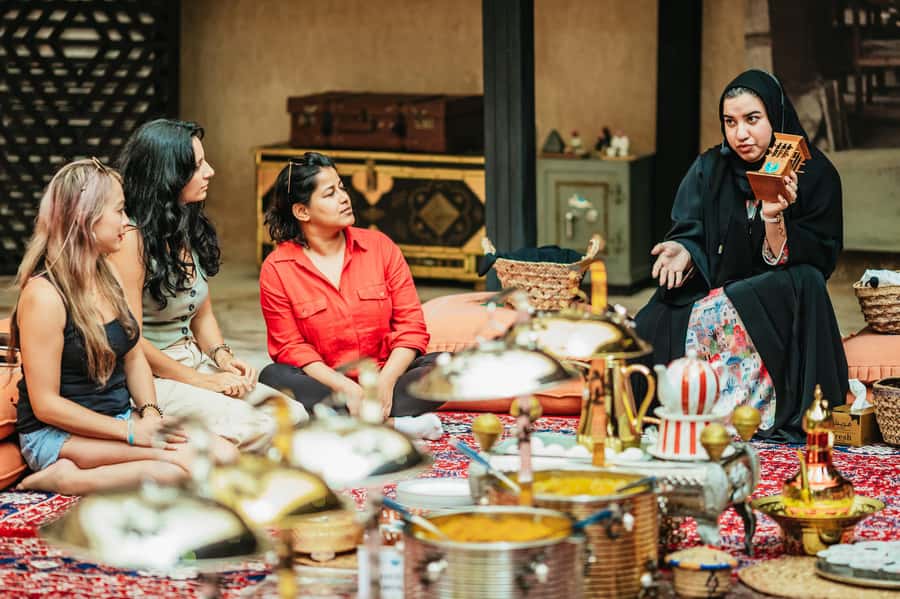
The experience is conducted in English, and the host or greeter language is English. You should be comfortable listening to explanations and asking questions in English to get the full benefit.
The meeting point is:
House 26, Al Musallah Road, Al Fahidi Historic District, next to the Ruler’s Court.
The activity includes breakfast at the Sheikh Mohammed Centre for Cultural Understanding, a selection of local Emirati dishes, Arabic coffee, tea, and dates. Dessert is also part of the food selection.
The activity allows free cancellation up to 24 hours before the start time for a full refund. You can also reserve now and pay later, which helps if you are still arranging a Dubai itinerary.
Starting times vary, so check availability for your chosen date. Since the activity is only 1.5 hours, the start time can matter if you plan to visit other parts of old Dubai afterward.
One practical point deserves emphasis: this is not a standard restaurant booking. You are joining a cultural program in a historic house. The atmosphere is conversational and respectful, and you should approach it with the same courtesy you would bring to someone explaining personal customs and religious values.
Who will enjoy this most

I would recommend the breakfast to:
- First-time visitors who want context for modern Dubai
- People interested in Emirati food and hospitality
- Anyone curious about Islam’s role in local values
- Solo visitors and couples who enjoy asking questions
- Repeat visitors looking for something beyond malls and skyscrapers
- Families with older children who can sit through a discussion
- Visitors already exploring the Al Fahidi Historic District
It may be less suitable if you want a large sightseeing route, a cooking class, or a menu with every dish announced in advance. It is also not ideal if you dislike floor seating or prefer a silent meal.
The experience works best for an open-minded person who wants conversation. You do not need to know much about the UAE beforehand. In fact, basic questions are welcome. The point is to replace uncertainty with a clearer understanding of local life.
Should you book the Emirati Cultural Breakfast?
Book it if you want a friendly, food-based introduction to Emirati culture in a real historic setting. The meal is well received, the presentation is praised for being clear and interesting, and the open question format gives you something most sightseeing stops lack: a chance to ask about the country directly.
At $38, it is a reasonable choice for a focused 90-minute activity. I would schedule it during time in Al Fahidi, arrive ready to participate, and bring a few questions about customs, religion, and modern Dubai.
Skip it if you are looking only for a quick meal or a conventional guided tour. For everyone else, this is a useful pause from Dubai’s polished surface, with coffee, dates, local food, and a more human view of the UAE.
FAQ
Where does the Emirati Cultural Breakfast take place?
It takes place at House 26, Al Musallah Road, in the Al Fahidi Historic District, next to the Ruler’s Court.
How long does the experience last?
The cultural breakfast lasts 1.5 hours.
What food and drinks are included?
The experience includes a selection of local Emirati dishes, Arabic coffee, tea, dates, and dessert.
Is the experience conducted in English?
Yes. The host or greeter language is English, and the listed language for the activity is English.
Can I ask questions about Dubai and Emirati culture?
Yes. You are encouraged to ask questions about local customs, traditions, Islam’s influence on values, cultural sensitivities, and life in Dubai today.
Is the breakfast served in a traditional building?
Yes. The Sheikh Mohammed Centre for Cultural Understanding is located in a traditional wind tower house in the Al Fahidi Historic District.
How much does the experience cost?
The price is $38 per person.
Can I cancel for a full refund?
Yes. You can cancel up to 24 hours in advance for a full refund. You can also reserve now and pay later.
Newest reviews from Dubai
- Dubai Sunrise private Desert Safari With Camel Ride★ 5.0 · 17 reviews
- Abu Dhabi City Tour and Qasr AL Watan★ 5.0 · 17 reviews
- Arabian Desert Safari Dubai★ 4.0 · 17 reviews
- Sunset Quad/Buggy Tour & BBQ Evening★ 4.5 · 17 reviews
- Sky Views Dubai with Options★ 4.5 · 17 reviews
- Marina Dhowe Cruise Dinner with Private Transfers★ 4.5 · 17 reviews
- Private Chauffeur Service★ 5.0 · 17 reviews
- Dubai City Tour with Hotel Transfers★ 5.0 · 17 reviews