
REVIEW · THE UAE
Dubai: Emirati Brunch & Culture
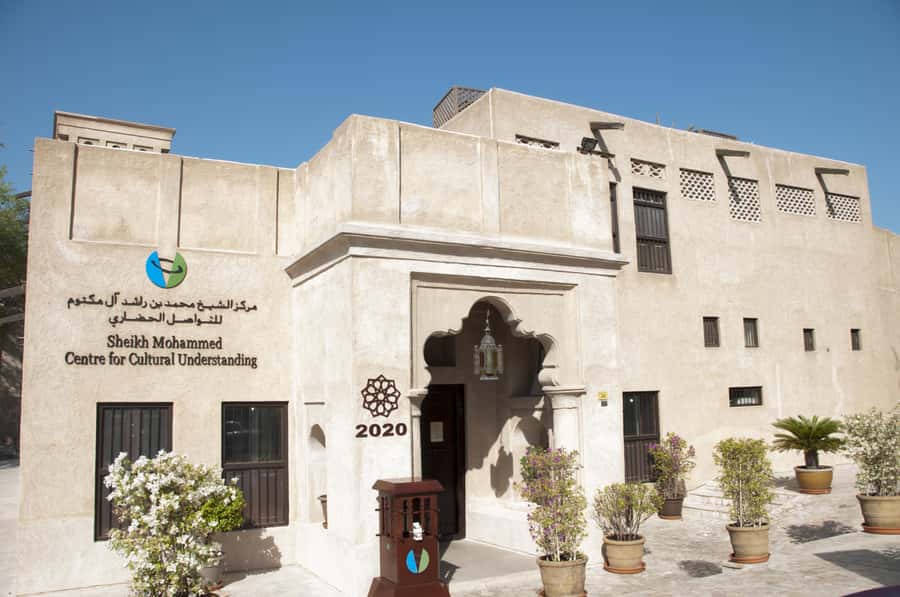
Come hungry, leave better informed. This small-group brunch at the Sheikh Mohammed Center for Cultural Understanding offers a friendly way to meet Emirati culture through food, conversation, and an old wind tower house in Dubai’s Al Fahidi Historic District. I like the open question-and-answer format and the chance to try several local dishes rather than simply hearing a lecture. I also like the setting, a traditional courtyard in the Al Bastakiya trading village, which gives the meal a clear sense of place.
The main consideration is timing. The experience is described as lasting 1.5 hours in the overview, while the activity details list one hour, so you should allow at least 90 minutes in your schedule. Also, this is a cultural meal first, not a dedicated food tour. If you want a long tasting session or restaurant-style presentation, the food may feel less central than the conversation.
In This Review
- Key details before you book
- Why this brunch adds something different to Dubai
- Arriving at House 26 in Al Fahidi
- Sitting on floor cushions in a wind tower house
- The Emirati food served at the brunch
- The conversation is the real centerpiece
- What the one-hour timing means
- Is $35 a fair price?
- Who will enjoy this experience most
- Practical booking advice for Al Fahidi
- Should you book the Emirati brunch?
- FAQ
- Where does the Emirati brunch take place?
- How long does the experience last?
- What food is included?
- Is the meal served in a restaurant?
- Do I sit at a table?
- Is transportation included?
- What language is the experience offered in?
- How large is the group?
- Is the activity wheelchair accessible?
- Can I cancel for a refund?
Key details before you book
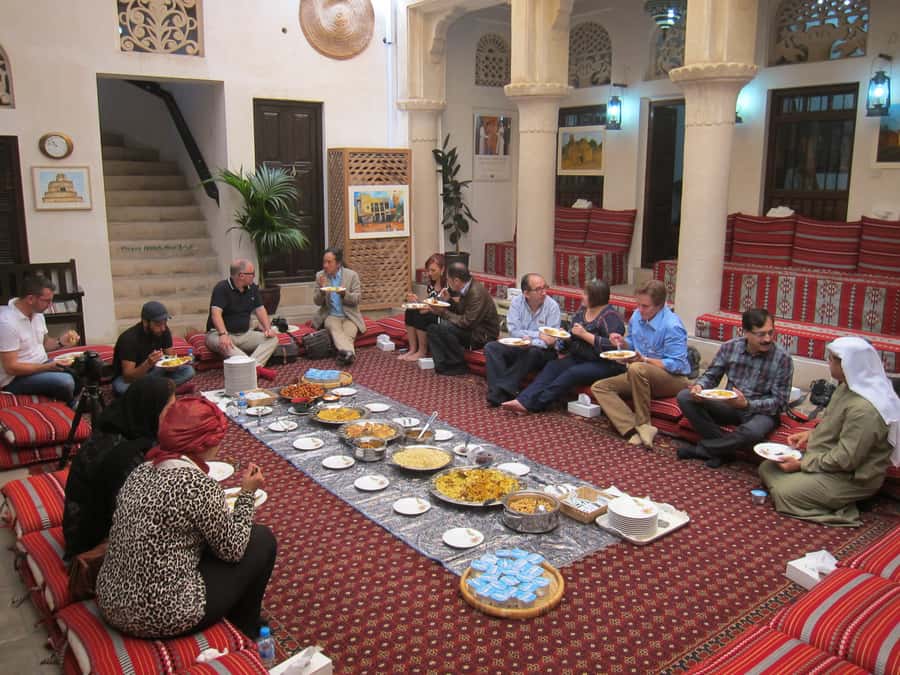
- Traditional courtyard setting: You eat on floor cushions inside a wind tower house at the Sheikh Mohammed Center for Cultural Understanding.
- Small group size: The group is limited to nine people, making it easier to ask questions and join the conversation.
- Emirati dishes and sweets: The meal includes local dishes, Arabic coffee, tea, dates, and ligamat, a famous Emirati dessert.
- Direct cultural conversation: Your English-speaking host or hostess invites questions about UAE customs, traditions, and daily life.
- Convenient Al Fahidi location: The meeting point is House 26, Al Musallah Road, beside the Ruler’s Court.
- Good flexibility: You can cancel up to 24 hours before the experience for a full refund, and reserve now while paying later.
Why this brunch adds something different to Dubai
Dubai can make it easy to see polished towers, shopping centers, and grand hotel interiors without learning much about Emirati life. This meal takes you into Al Fahidi, one of the city’s older districts, and gives you a local setting for a straightforward conversation.
The Sheikh Mohammed Center for Cultural Understanding was created to improve communication between local people and those visiting the UAE. Its programs aim to explain customs and clear up misunderstandings. That purpose shapes the experience: you are encouraged to ask questions, including questions that might feel too basic or sensitive in another setting.
I value that direct approach. A guide can tell you facts about clothing, family life, religion, food, or social customs, but the chance to ask follow-up questions is often more useful. You are not just receiving a prepared speech. You can steer part of the conversation toward what you actually want to understand.
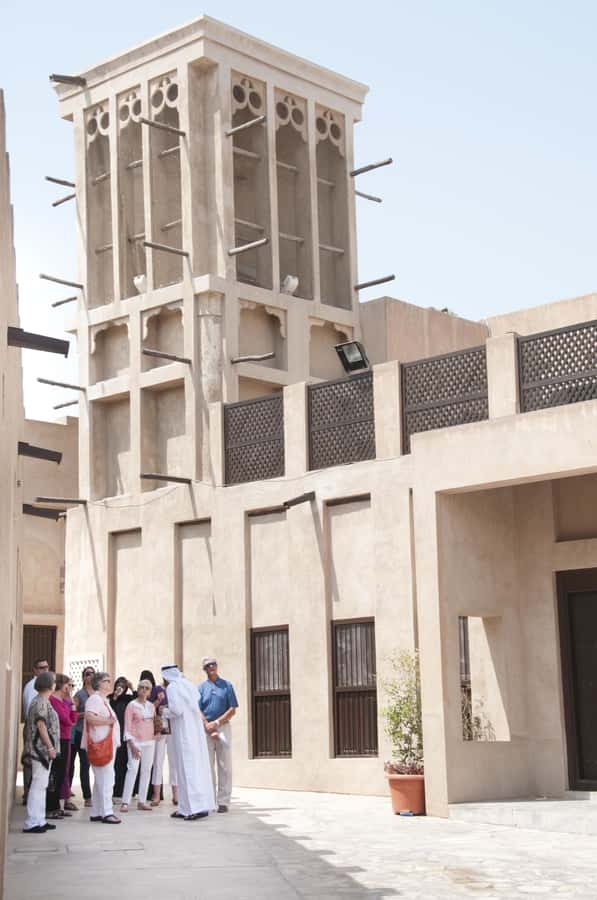
The setting helps, too. The center is housed in a traditional wind tower house in the Al Bastakiya trading village, within the Al Fahidi Historic District. The courtyard and floor cushions are not decoration added to a modern restaurant. They are part of the historic house itself, giving the meal a physical connection to older Dubai.
More Emirati meals:
- Authentic Emirati Cultural Meal and Talk in Old Dubai
★ 5.0 · 150 reviews - Dubai: Emirati Cultural Breakfast Experience
★ 4.7 · 42 reviews - Dubai: Emirati Cultural Experience with Emirati Meal
★ 4.6 · 11 reviews
Arriving at House 26 in Al Fahidi
The stated meeting point is House 26 on Al Musallah Road, next to the Ruler’s Court. You should use the full address when planning your route, since Al Fahidi has several lanes, courtyards, and historic buildings that can look similar at first glance.
The location is one of the strongest parts of the experience. You get a taste of Dubai’s older architectural style before the meal even begins. The wind tower house is a reminder that people once designed buildings around the Gulf climate using shade, airflow, and thick walls rather than modern air-conditioning.
You do not need transportation as part of the booking. The experience does not include transfers, so you must make your own way to House 26. That is not a major problem if you are already visiting Al Fahidi, but it matters if you are staying far away or planning a tight day around other attractions.
Give yourself enough time to find the building. A late arrival could cut into a short meal and conversation. The center is in a district worth allowing extra time for, so arriving early gives you a chance to look around rather than rushing straight to the cushions.
Sitting on floor cushions in a wind tower house
The meal takes place in the center’s courtyard, where you sit on traditional floor cushions. This is a more informal arrangement than a standard restaurant table, and it suits the purpose of the visit. You are seated close to the host and the rest of the group, which makes conversation feel natural.
The group limit is nine participants. That is small enough for everyone to ask something, though the actual feel will depend on the number of people who attend and how actively they join in. A small group also means you are less likely to be lost at the back of a formal presentation.
The experience is wheelchair accessible, an important practical point for visitors who need step-free access or suitable facilities. Still, the floor cushion arrangement may not suit everyone equally well. If you have difficulty sitting low to the ground, you may want to contact the provider before booking to ask how seating can be handled.
The courtyard setting also means this is not designed as a formal fine-dining meal. Expect a cultural program served in a traditional house, not polished restaurant service. That distinction helps set the right expectations.
The Emirati food served at the brunch
The meal includes a selection of local Emirati dishes, along with Arabic coffee, tea, and dates. The exact menu is not specified, so you should think of it as a sampling of traditional food rather than a fixed tasting menu with a published course list.
Arabic coffee and dates provide a classic opening combination in Gulf hospitality. The coffee is served in small portions, and the dates add sweetness alongside it. These foods are not just refreshments. They help introduce customs of welcoming and sharing that are central to the meal’s cultural purpose.
The menu also includes ligamat, one of the Emirates’ best-known desserts. These small sweet dumplings are a useful highlight because dessert offers an easy way to connect food with local habits. If you enjoy trying sweets, save room for this part of the meal.
Several people have found the meal plentiful, varied, and tasty. Takeaway boxes have also been offered, allowing diners to bring favorite dishes back to their hotel. That is a generous practical touch, especially if the portions are as filling as described.
Still, I would not book this as a specialist food excursion. One published experience gave the food a low score and felt the dishes could have been more authentic or better prepared. That criticism is worth taking seriously. The main value here is the combination of food and cultural discussion, not a chef-led exploration of Emirati cuisine.
In other words, food quality may be the most variable part of the experience. The meal is a vehicle for conversation, hospitality, and context. If you want to sample local dishes while learning how they fit into Emirati life, it makes sense. If food is your only reason for booking, you may want a more focused culinary activity.
A completely different kind of day out on the same trip:
- Dubai: Burj Khalifa Levels 124 & 125 Entry Ticket + Options
★ 4.3 · 90,891 reviews - Dubai: Desert Safari, Quad Bike, Camel Ride & Al Khayma Camp
★ 4.9 · 68,962 reviews - Dubai: Desert Safari, Quad Bike, Camel Ride and Sandboarding
★ 4.9 · 43,505 reviews - Dubai: Safari, Quad Bike, Camel Ride, and Buffet Dinner
★ 4.9 · 33,424 reviews
The conversation is the real centerpiece
The cultural question-and-answer session is what gives this experience its value. Your English-speaking host or hostess is there to discuss UAE customs, traditions, and everyday life. You can ask questions directly instead of waiting for a guide to cover a fixed list of topics.
The center’s stated goal is to make local culture easier to understand and to remove confusion between local people and those from other cultures. That makes the tone more open than a standard sightseeing talk. You can ask about subjects that are often difficult to understand from guidebooks alone.
The exact conversation will depend on your group. You might hear more about traditions, food, history, religion, family life, or the changes brought by modern Dubai. Since no individual host name is provided for this activity, you should focus on the format rather than expecting a particular presenter.
A useful tip is to arrive with a few questions ready. Ask about the dishes as they are served. Ask how the food is eaten, when it is served, or what it means in a social setting. Questions tied to the meal usually lead to more useful answers than a long list of general facts.
The experience also suits people who prefer a relaxed pace. You are not being moved from one attraction to another. You sit, eat, listen, and talk. For some people, that will be the best part of the Dubai visit. For others, it may feel too quiet or too short.
What the one-hour timing means
The activity details list a duration of one hour, while the main description calls it a 1.5-hour cultural brunch. I would plan for 90 minutes so you are not rushed, but understand that the actual program may be closer to an hour.
That difference matters if you are fitting the brunch between museum visits, a souk visit, or an evening reservation. The experience itself is not long enough to fill half a day. Its short length makes it easy to add to a day in Al Fahidi, but it also means the food and discussion may move at a fairly brisk pace.
You may spend the opening portion settling into the courtyard and receiving coffee, tea, and dates. The main meal and conversation follow, with time for questions. Dessert, including ligamat, rounds out the meal. The exact order can vary, since this is a hosted cultural gathering rather than a theatrical show.
If you want to explore Al Fahidi properly, add separate time before or after the brunch. The meal lets you see the center’s traditional house, but it is not a full walking tour of the historic district.
Is $35 a fair price?
At $35 per person, the price is reasonable if you value direct cultural contact and a complete meal. Your fee includes the brunch, local dishes, Arabic coffee, tea, dates, and the cultural question-and-answer session. You are also paying for a small group in a historic setting, not just for plates of food.
The value improves if you make use of the conversation. A person who eats quickly, asks little, and leaves after a short meal may not feel the experience earned its price. Someone who comes prepared to listen and ask questions can get much more from the same hour.
The meal’s quality may influence your personal view of the price. Most available feedback describes the food as delicious, generous, or very good, while one critical assessment found it less authentic and lower in quality. That mixed picture suggests you should book for the full cultural program, with food as an important part, rather than treating it as a bargain restaurant meal.
The possibility of takeaway food is another small value point. When offered, a box lets you bring favorite dishes back to your hotel. It is not guaranteed as a separate inclusion, but it has been a welcome feature for some people.
Who will enjoy this experience most
I would recommend the brunch to first-time visitors who want a clearer picture of the UAE beyond Dubai’s modern image. It is also a good fit for couples, families, and solo visitors who enjoy conversation and do not mind asking questions in a shared setting.
It suits you especially well if you:
- Want to try Emirati food without committing to a long dinner
- Prefer a small group over a large coach tour
- Enjoy learning through conversation
- Are already planning to visit Al Fahidi
- Want a cultural activity that works in English
- Like informal meals and historic settings
Families may appreciate the open format because children can ask questions rather than sit through a long lecture. People with limited time may like the one-hour listing, though I would still reserve 90 minutes in the day.
This may not be your best choice if you want a detailed culinary tour, a modern restaurant, or extensive sightseeing. The activity focuses on the center, the meal, and the discussion. It does not include transportation or a wider tour of Dubai.
Practical booking advice for Al Fahidi
The experience is offered in English and is limited to nine participants. That small size is useful, but it also means spaces can be limited on popular dates. You can reserve now and pay later, which helps if your Dubai schedule is still taking shape.
Free cancellation is available up to 24 hours before the experience for a full refund. Keep that deadline in mind if your plans depend on flights, heat, or other bookings.
Wear something comfortable for sitting on floor cushions and allow time to reach House 26. The activity is wheelchair accessible, but the low seating arrangement is worth checking in advance if you need a chair or have mobility concerns.
Most important, do not arrive expecting a silent meal. The program is built around questions. You will get more from it if you treat the host as a person you can speak with, not simply as someone delivering information.
Should you book the Emirati brunch?
Book it if you want a friendly introduction to Emirati customs, local dishes, and everyday culture in a setting tied to old Dubai. The small group and open Q&A make it more personal than a standard sightseeing stop, while the coffee, dates, varied dishes, and ligamat give the conversation a useful connection to local hospitality.
Skip it if you are looking for a serious food tour or a full historical walk through Al Fahidi. The menu is not published in detail, the duration is somewhat unclear, and food quality may not satisfy a strict culinary enthusiast.
For most visitors, I would place this early in a Dubai visit. It can give you context for the rest of your time in the UAE, and the $35 price is fair when you treat the meal as part of a cultural exchange rather than the whole product.
FAQ
Where does the Emirati brunch take place?
It takes place at the Sheikh Mohammed Center for Cultural Understanding, House 26, Al Musallah Road, in the Al Fahidi or Al Bastakiya Historic District next to the Ruler’s Court.
How long does the experience last?
The activity details list one hour, while the main description states 1.5 hours. Plan for about 90 minutes to allow enough time.
What food is included?
The brunch includes a selection of local Emirati dishes, Arabic coffee, tea, dates, and ligamat, a famous Emirati dessert.
Is the meal served in a restaurant?
No. The meal is served in the courtyard of a traditional wind tower house at the Sheikh Mohammed Center for Cultural Understanding.
Do I sit at a table?
You sit on traditional floor cushions in the courtyard.
Is transportation included?
No. Transportation is not included, so you must make your own way to the meeting point.
What language is the experience offered in?
The live tour guide and cultural session are offered in English.
How large is the group?
The experience is limited to nine participants.
Is the activity wheelchair accessible?
Yes, the activity is listed as wheelchair accessible. If you need a standard chair instead of floor seating, contact the provider before booking.
Can I cancel for a refund?
Yes. You can cancel up to 24 hours in advance for a full refund.
Newest reviews from Dubai
- Dubai Sunrise private Desert Safari With Camel Ride★ 5.0 · 17 reviews
- Abu Dhabi City Tour and Qasr AL Watan★ 5.0 · 17 reviews
- Arabian Desert Safari Dubai★ 4.0 · 17 reviews
- Sunset Quad/Buggy Tour & BBQ Evening★ 4.5 · 17 reviews
- Sky Views Dubai with Options★ 4.5 · 17 reviews
- Marina Dhowe Cruise Dinner with Private Transfers★ 4.5 · 17 reviews
- Private Chauffeur Service★ 5.0 · 17 reviews
- Dubai City Tour with Hotel Transfers★ 5.0 · 17 reviews